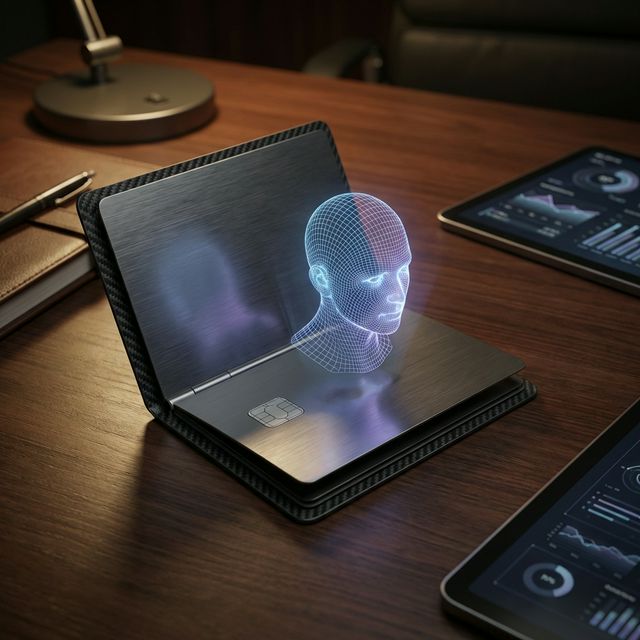
The way we prove who we are online is undergoing a fundamental transformation. For decades, digital identity has relied on analog methods — scanning physical documents, uploading selfies, remembering passwords. But the next generation of identity technology is poised to change everything. The question is: will it protect us, or surveil us?
Where We Are Today
The current identity verification landscape relies heavily on a few problematic approaches:
- Document verification — Upload your passport or driver's license, hope the company doesn't get hacked
- Selfie matching — Take a photo of your face and have AI compare it to your ID
- Knowledge-based authentication — Answer questions about your credit history or personal records
- Social sign-on — Let Google or Facebook vouch for your identity (trading privacy for convenience)
Each method has significant drawbacks — from security vulnerabilities to privacy erosion. The industry is ripe for disruption.
Emerging Technologies
Decentralized Identity (DID)
Perhaps the most promising approach, decentralized identity systems allow users to hold their own verifiable credentials — like a digital wallet that proves facts about you without revealing unnecessary details. You could prove you're over 18 without sharing your name, address, or birthdate.
Zero-Knowledge Proofs (ZKPs)
Zero-knowledge proofs are cryptographic techniques that let one party prove a statement is true without revealing any underlying data. Applied to age verification, a ZKP could mathematically prove "this person is over 18" without ever exposing the actual date of birth to anyone.
3D Avatar Technology
Tools like PrivacyPuppet represent a creative bridge between current systems and a privacy-preserving future. By generating realistic 3D human avatars with natural movements — blinking, breathing, eye tracking — users can interact with verification systems without exposing their real biometric data.
These avatars run entirely in the browser using WebGL, meaning no personal data ever leaves your device. It's privacy by design.
Behavioral Biometrics
Rather than verifying who you are, behavioral biometrics verify how you are. Typing patterns, mouse movements, and interaction timing can distinguish adults from minors with reasonable accuracy — without collecting any identity documents at all.
The Privacy Spectrum
Not all future identity technologies are created equal. We can map them on a privacy spectrum:
- Worst: Full biometric + document collection with indefinite data retention
- Poor: Centralized verification services that store identity data
- Better: Tokenized systems with limited data exposure
- Good: Client-side processing with zero data transmission
- Best: Zero-knowledge proofs and decentralized credentials
PrivacyPuppet operates in the "Good" tier — all processing is local, and no biometric data from the user is ever captured or transmitted.
What Will Win?
History suggests that technologies which respect user autonomy eventually prevail. Just as HTTPS became the default over HTTP, and end-to-end encryption became standard in messaging, we believe privacy-preserving verification will become the norm.
The companies that adopt these approaches early will earn user trust. Those that cling to invasive data collection will face increasing regulatory pressure, user backlash, and competitive disadvantage.
The best identity system is one that proves what needs to be proven — nothing more, nothing less. We're building toward that future.
Our Role in Shaping the Future
At PrivacyPuppet, we're not just building tools — we're advocating for a paradigm shift. Every time a user chooses a privacy-preserving alternative over an invasive one, it sends a market signal. And those signals add up.
The future of digital identity doesn't have to be dystopian. With the right tools, the right policies, and enough people who care about privacy, we can build an internet where proving you're human doesn't mean surrendering your humanity.